 You are now logged out.

The #1 Rare Earth Robotics Stock
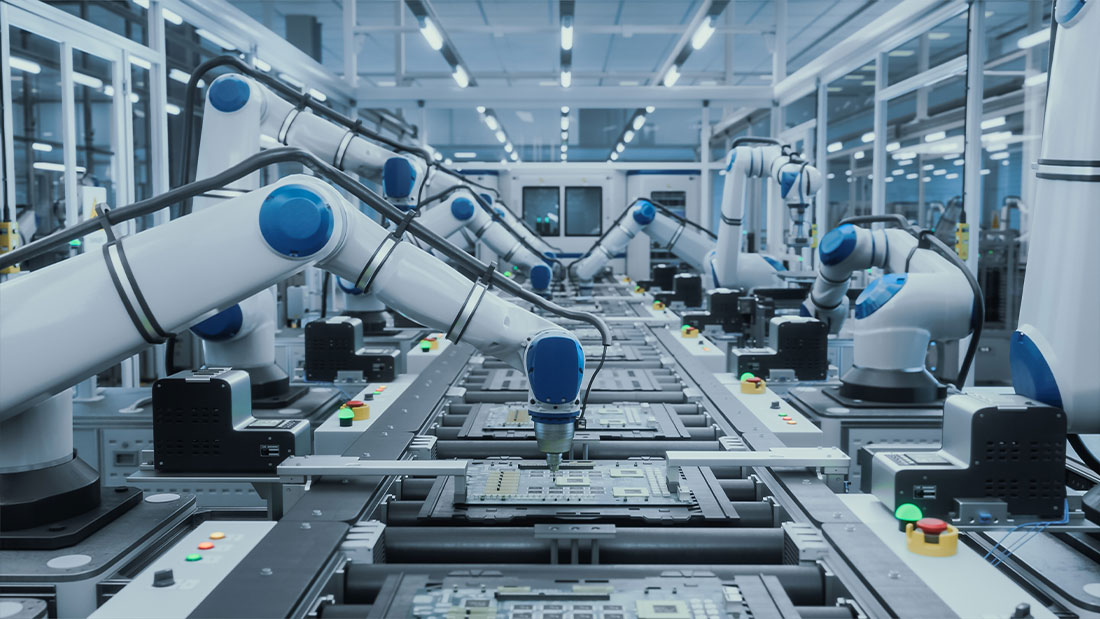
The next phase of the AI revolution has arrived.
Factories are being redesigned. Production lines are being retooled. Entire industries are preparing for a world where artificial intelligence – or, as I like to call it, advanced intelligence – is not just software but something that moves, builds, transports, and manufactures.
I’m talking about robotics.
And robotics, unlike software, depends on something more tangible.
You see, at the center of nearly every electric motor – in a vehicle or a robot – is a system of high-performance magnets.
These magnets turn electrical energy into motion.
They help motors spin faster, run more efficiently, and deliver precise control.
In advanced systems like humanoid robots, that precision is critical. Every joint, every movement, every adjustment depends on motors that must deliver both strength and accuracy.
And those motors depend on a specific group of materials known as rare earth elements.
One of the most important is neodymium. It is used to produce permanent magnets with very high strength for their size.
Without these materials, many of today’s advanced systems would not work as intended.
Demand is growing fast. It is driven by electric vehicles (EVs), renewable energy, and now robotics.
Yet rare earth elements remain one of the least understood parts of the modern supply chain.
A Supply Chain Few Investors Have Considered
Over the past several decades, rare earth production has become heavily concentrated.
Today, China dominates the global rare earth supply chain.
In some segments, particularly in the processing of rare earth magnets, China accounts for about 90% of global capacity.
That creates a clear risk.
Not just for companies… but for entire industries.
In fact, the White House has identified 12 critical minerals that the U.S. is 100% reliant on foreign nations to provide.
President Donald Trump says it’s a matter of national security to change this.
America needs its own supply.
As demand for EVs, robotics, and advanced manufacturing increases, so does reliance on these materials.
And when supply is tight – due to policy, trade limits, or capacity – the effects spread across the entire system.
We are already seeing this affect major companies.
Luckily for us, it’s also creating opportunity for companies positioned to become America’s key domestic suppliers.
Not just those mining raw materials… but also those processing them… refining them… and ultimately turning them into usable components, like the magnets needed for Elon Musk’s Optimus robots.
That is what makes MP Materials (NYSE: MP) uniquely positioned to benefit from the explosive demand for rare earths.
A Strategic Position in a Critical Industry
MP Materials operates one of the largest rare earth deposits in North America, at Mountain Pass, California.
But it is doing more than mining.
The company is expanding into processing and magnet production.
That matters, because the highest-value part of the rare earth market is not raw material – it’s the finished product: magnets.
By building these capabilities in the U.S., MP is becoming a key supplier in a changing supply chain.
It is also aligning with both business and government efforts to reduce reliance on foreign sources.
On the business side, MP has a long-term agreement with General Motors to supply U.S.-sourced rare earth materials and finished magnets for EV motors.
That supports MP’s move into downstream production and shows a shift toward domestic supply.
MP also has a partnership with Sumitomo Corporation, one of Japan’s largest trading and industrial groups. This provides capital and access to global markets, while strengthening MP’s role outside China.
In July 2025, the U.S. Department of Defense took a 15% stake in MP, becoming its largest shareholder. The deal was aimed at securing a domestic rare earth magnet supply chain and reducing reliance on China.
And recently, broader federal initiatives – including incentives tied to the Inflation Reduction Act and other supply chain programs – have made it easier to build domestic capacity.
All of this creates a strong backdrop for MP Materials.
It is already the leading rare earth supplier in the U.S.
It has support from government policy, regulation, and investment.
And it is expanding its reach across the country.
But one project stands out as a major opportunity.
A Domestic Supply Chain Is Beginning to Take Shape
In early 2026, two things happened.
First, MP announced an “enormous” deal with a mystery automaker.
The automaker was described as “one of America’s leading industrial and technology companies.”
So it’s an automaker that’s also a leader in technology.
That sounds a lot like Tesla.
Second, MP announced plans for a large magnet plant in Northlake, Texas.
This facility, referred to as “10X,” is meant to expand MP’s ability to produce finished magnetic materials within the United States.
So MP signs a major deal with a company that sounds an awful lot like Tesla… then starts building a massive facility in Texas… right near the Tesla Gigafactory.
It doesn’t take a genius to put two and two together.
We believe MP could become Tesla’s main supplier of rare earth magnets. And that’s important, because Tesla needs a whole lot of them.
Tesla is no longer just a car company.
It is building a full system of EVs, self-driving transport, and humanoid robots. All of these depend on electric motors.
Start with EVs.
Each Tesla vehicle uses multiple motors. Each of those motors uses powerful magnets made with rare earth elements like neodymium and praseodymium.
As Tesla scales production into the millions of vehicles per year, demand will grow with it.
And that is only part of the story.
Tesla is also developing a Cybercab network — self-driving vehicles designed to operate continuously.
Unlike traditional vehicles, these are built for near-constant operation.
That means more vehicles… more motors… and more wear-and-tear requiring replacement components over time.
In other words, higher throughput and sustained demand for the materials that keep those systems running.
And then there is Optimus.
Tesla’s humanoid robot is perhaps the most overlooked — and potentially the most significant — driver of future demand.
Because a humanoid robot is, at its core, a highly complex system of electric motors.
Every joint… every hand movement… every step… requires precise actuation.
Early versions of Optimus are believed to contain dozens of individual motors.
Now multiply that by thousands… potentially millions… of robots in use, and the scale becomes clear.
Each robot uses far more motors than a car. And every motor needs rare earth magnets.
So when you combine Tesla’s existing vehicle production… its future Cybercab fleet… and the potential mass deployment of Optimus robots… You get a major rise in demand for rare earth materials.
And importantly, this demand is highly concentrated in one critical component: permanent magnets.
And that brings us back to MP.
If MP becomes a main supplier of these magnets…
It wouldn’t just participate in Tesla’s growth.
It would become a foundational part of it.
In short, MP is working to become the dominant rare earth supplier in America.
A deal with Tesla could ramp up production to new levels.
By developing a domestic, end-to-end supply chain – from mining to processing to magnet production – the company is positioning itself as the premier integrated supplier.
That integration reduces dependence on outside partners, shortens supply chains, and increases its control over pricing and production timelines.
It also aligns with a broader shift in U.S. industrial policy.
The U.S. government is pushing for domestic sourcing of key materials tied to energy, transport, and defense.
Rare earth magnets are central to that effort.
The Northlake facility could play a major role.
Once operational, it would expand MP’s manufacturing capacity many times over. That would help it serve a larger share of domestic demand across EVs, automation, and robotics.
What’s more, the company continues to advance its upstream operations at Mountain Pass, maintaining a steady flow of raw material into the system.
Financial Strength in a Strategic Business
Unlike many companies tied to emerging technologies, MP Materials is not losing money.
It is a revenue-generating business with a growing role in a strategically important supply chain.
In Q4 2025, the company returned to profitability, helped by U.S. government-backed price support.
Revenue was about $50 million for the quarter.
For the full year, MP Materials generated roughly $250 million in revenue. This is not a business dependent on speculative future demand. It is already producing and selling materials into global supply chains, while investing to move further downstream into refining and magnet production.
Its balance sheet also provides flexibility to execute that strategy.
MP Materials ended the year with over $800 million in liquidity. This gives it the ability to fund expansion projects without relying heavily on external financing.
That capital is being deployed toward building out domestic processing and magnet manufacturing capabilities – the highest-value segments of the rare earth supply chain.
You can also see this shift taking shape through trade policy.
In recent years, the U.S. has taken a more assertive stance on tariffs and import restrictions tied to critical materials — particularly those dominated by foreign supply chains.
Rare earths sit at the center of that conversation.
As tariffs increase the cost of imported materials — and as geopolitical tensions introduce additional uncertainty — companies that rely on these inputs are being forced to rethink how and where they source them.
And that creates a clear advantage for domestic producers.
Because for many U.S. manufacturers, sourcing from overseas is no longer just a cost decision…
It’s a risk decision.
Tariffs can change overnight.
Supply chains can be disrupted.
And access to critical materials can become constrained at exactly the wrong time.
So instead of relying on imports, businesses are increasingly looking for secure, long-term domestic supply agreements.
That puts MP Materials in a very strong position.
It is one of the only companies in the United States with the capability to mine, process, and — increasingly — manufacture rare earth magnets at scale.
Which means companies across multiple industries — from automotive to defense to consumer electronics — may have little choice but to partner with MP if they want reliable access to these materials.
In effect, tariffs and trade policy are not just protecting domestic producers…
They are actively driving demand toward them.
And we are already seeing early signs of this trend.
MP Materials has entered into a major long-term agreement with Apple valued at approximately $500 million, supplying rare earth materials critical to Apple’s hardware ecosystem.
That kind of deal is significant.
It demonstrates that some of the largest and most sophisticated companies in the world are moving to lock in supply now — before constraints become more severe.
And it likely won’t be the last.
As tariffs remain in place — or expand — and as supply chain risks continue to rise, more companies will be pushed in the same direction.
They will need dependable, domestic sources of rare earth materials.
They will need long-term contracts.
And increasingly, they will turn to the same limited group of suppliers.
Which suggests that demand for MP Materials’ output may not just grow…
It could accelerate.
Taken together, this creates a different financial profile than most emerging technology plays.
MP Materials is not just positioned for future growth.
It is already generating revenue, supported by policy tailwinds, and investing in higher-margin segments that could expand profitability over time.
A Valuation That Reflects Uncertainty – Not Necessity
Despite its position, MP Materials is not priced like a company at the center of a structural shift.
The stock continues to trade in line with commodity-oriented businesses, reflecting concerns about pricing cycles and near-term variability.
But that perspective may overlook the broader trend.
As industries become more dependent on advanced materials, and as supply chains are reconfigured to prioritize domestic sources, companies with established capabilities stand to benefit.
In that context, MP Materials occupies a position that is difficult to replicate.
It controls a key resource.
It is expanding into higher-value segments.
And it is aligned with long-term shifts in both technology and policy.
Action to Take: Buy MP Materials (NYSE: MP) at market, and set a 40% trailing stop to protect your principal and your profits. We would generally use a 25% trailing stop, but we will sometimes use a wider stop for more volatile plays.