 You are now logged out.

The Last Penny: How the Mint’s Decision Signals a Copper Windfall
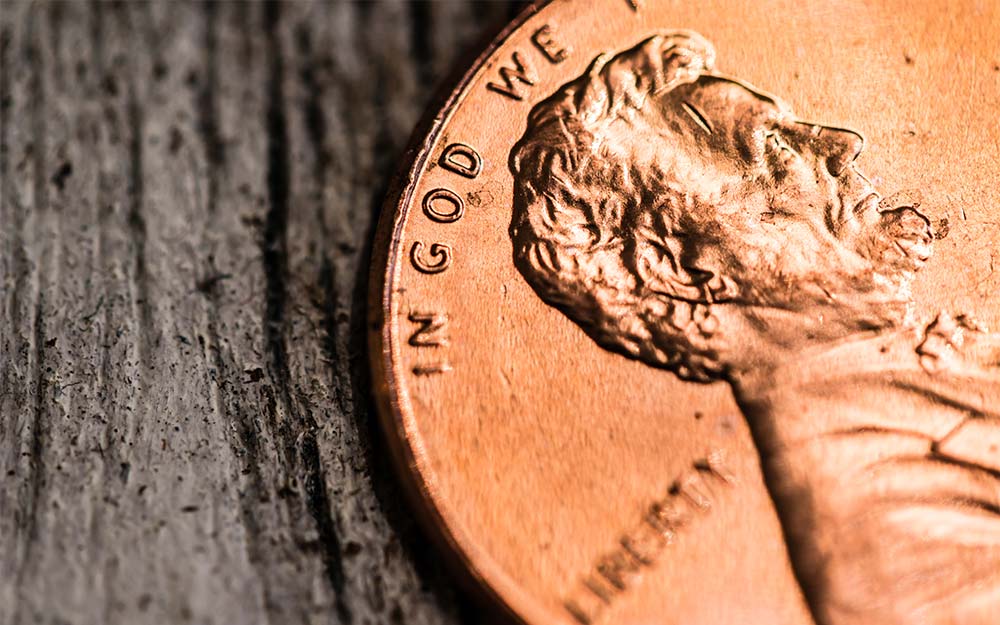
At first glance, the disappearance of the American penny looks like a minor footnote in monetary history.
After all, governments adjust coinage all the time. Costs rise, inflation erodes purchasing power, and the smallest denominations quietly fade away.
But occasionally, something much larger is hiding behind a small policy change.
That is the case today.
In late 2025, the U.S. Mint announced it would stop producing new one-cent coins because the cost of manufacturing them had risen dramatically above their face value. The metal content and production costs had climbed so high that each penny was costing several times more to produce than the one cent it represented.
On the surface, this looks like a budgeting decision.
In reality, it is a signal.
Because the metal embedded inside the penny – copper – has quietly become one of the most strategically important industrial resources in the global economy.
And when governments start abandoning currency denominations because the metal inside them has become too valuable to waste, it usually means something bigger is happening beneath the surface.
To understand why this matters for investors, we need to step back and look at the copper market itself.
The Metal That Powers the Modern World
Copper rarely makes headlines. It is not as glamorous as gold, and it does not attract the speculative attention that lithium or rare earth elements receive.
But in the modern economy, copper is arguably the most indispensable industrial metal in existence.
Every electrical system relies on it.
Every power grid depends on it.
Every data center, electric vehicle, telecommunications network, and renewable energy installation requires massive quantities of it.
That is because copper has a unique combination of properties that make it extremely difficult to replace. It is one of the best electrical conductors on Earth. It is durable, corrosion resistant, and easy to shape into wires and components. For large-scale electrical infrastructure, no other material performs as well at an affordable cost.
That is why copper demand expands every time the world builds new electrical systems.
And today, the global economy is entering one of the largest electrical infrastructure expansions in history.
Electric vehicles require two to four times more copper than internal combustion vehicles. Renewable power systems such as solar and wind require enormous quantities of copper for wiring, inverters, and grid connections. Artificial intelligence data centers require vast electrical capacity, which in turn requires miles of copper cabling and transformers.
Even traditional infrastructure upgrades – modernizing aging power grids and expanding transmission networks – require copper in large quantities.
In short, copper demand is accelerating at precisely the same time the world is electrifying everything.
Which brings us to the second half of the equation: supply.
Why Copper Supply Cannot Keep Up
Most commodities can respond to rising demand relatively quickly. Farmers plant more crops. Oil companies drill more wells. Manufacturers increase production.
Copper is different.
Developing a modern copper mine is incredibly complex.
First, a viable deposit must be discovered. Then geologists must confirm the ore body is large enough and rich enough to justify development. Environmental permits must be obtained. Infrastructure must be built – roads, power, processing facilities, water systems.
Only after all of that can the actual mining begin.
From discovery to production, the process can take 15 to 20 years.
That long timeline means the copper market cannot quickly respond to sudden increases in demand.
And today, demand is rising much faster than supply can adjust.
Many of the world’s largest copper mines were discovered decades ago. Their ore grades are gradually declining, meaning miners must process more rock to produce the same amount of metal.
At the same time, environmental restrictions, political risks, and permitting delays have made new projects harder to build.
The result is a structural imbalance.
Global copper consumption continues rising while new mine supply grows slowly.
Over time, that imbalance has one predictable outcome: higher prices.
Why the Penny Matters
Now we return to the humble penny.
For decades, the one-cent coin quietly circulated through the economy while the metal inside it remained inexpensive.
But copper prices have steadily climbed over the past generation.
Eventually, the metal content and manufacturing costs became so high that producing the coin no longer made economic sense.
When governments start abandoning coinage because the underlying metal has become too valuable, it often reflects a deeper change in commodity markets.
In this case, it reflects the rising strategic importance of copper itself.
That importance is already visible in global trade patterns.
China alone consumes more than half of the world’s copper supply. Its vast manufacturing base, construction industry, and power grid expansion require enormous quantities of the metal every year.
Meanwhile, Western economies are attempting to rebuild domestic supply chains for critical materials – including copper – to reduce reliance on foreign sources.
The world is entering an era where control of industrial resources matters again.
Copper sits at the center of that shift.
The thing is, understanding the copper shortage is one thing.
Profiting from it is another.
Commodity booms do not benefit every company equally. Some firms operate marginal mines with high costs. Others face political risks in unstable regions. Many miners struggle with heavy debt or operational setbacks.
But a small group of companies control some of the most productive copper assets in the world.
And one company in particular stands out as one of the most direct ways for investors to gain exposure to rising copper demand.
A Copper Giant Hidden in Plain Sight
Southern Copper Corp. (NYSE: SCCO) is one of the largest integrated copper producers in the world.
The company operates major mining complexes in Peru and Mexico – two of the most copper-rich regions on the planet. These operations include large open-pit mines, concentrators, smelting facilities, and refining operations.
That vertical integration gives Southern Copper a key advantage.
Instead of simply extracting raw ore and selling it to third-party processors, the company controls the entire production chain from mine to refined metal.
This allows it to capture more value from each pound of copper produced while maintaining lower operating costs than many competitors.
And scale matters enormously in the mining industry.
Large deposits allow companies to spread fixed costs across massive production volumes, improving margins and resilience during commodity cycles.
Southern Copper has spent decades building exactly that kind of large-scale operational footprint.
Financial Strength and Operational Momentum
The company’s financial performance reflects the strength of its asses.
Southern Copper consistently ranks among the lowest-cost copper producers globally, which allows it to remain profitable even during weaker commodity markets.
When copper prices rise, that cost advantage can translate into significant earnings growth.
Over the past several years, the company has generated billions of dollars in annual revenue while maintaining strong operating margins relative to many mining peers.
Its balance sheet remains healthy, supported by steady cash flows from large, long-lived mining operations.
This stability is one reason Southern Copper has been able to return significant capital to shareholders through dividends.
Mining companies often face boom-and-bust cycles. But firms with high-quality assets and strong cost structures tend to weather those cycles far better than smaller operators.
Southern Copper fits that profile.
And that stability becomes especially valuable during periods when the underlying commodity enters a structural bull market.
Why Timing Matters Now
Commodity markets often move in long cycles.
For years, low prices discourage investment in new supply. Eventually demand catches up. Inventories tighten. Prices begin to rise.
When that process unfolds in a metal, like copper, with long development timelines, the effects can persist for many years.
Today, the global economy is entering a phase where electrification, artificial intelligence infrastructure, and power grid expansion are all accelerating simultaneously.
Each of those trends requires enormous quantities of copper.
At the same time, new mines cannot be built quickly enough to close the gap.
That imbalance is exactly the type of environment that historically drives major commodity cycles.
And when those cycles develop, the companies already producing large volumes of the metal often benefit first.
Southern Copper is positioned squarely in that category.
Turning Imbalance Into Opportunity
The disappearance of the penny may seem trivial.
But it reflects a much deeper reality in global commodity markets.
Copper is becoming more valuable not because of speculation, but because the modern economy cannot function without it.
Every electric vehicle, every renewable power installation, every AI data center, and every upgraded power grid adds new demand for the metal.
Meanwhile, the long timelines required to build new mines ensure that supply cannot expand quickly enough to keep pace.
That imbalance is the foundation of many of history’s largest commodity bull markets.
For investors seeking exposure to that trend, companies already producing copper at scale offer one of the most direct paths to participate.
Southern Copper Corp. stands among the most established of those producers – with world-class assets, strong financial performance, and decades of operational experience in one of the most essential industries on Earth.
If copper continues its climb in the years ahead, companies like Southern Copper will sit at the center of the story.
And that small, nearly forgotten coin in your pocket may end up being remembered as the earliest signal that the copper market was beginning to change.
Recommendation: Buy Southern Copper Corp. (NYSE: SCCO) at market. And use our customary 25% trailing stop to protect your principal and your profits.