 You are now logged out.

Nvidia’s Secret Partner: This Single AI Stock Could Help Fund Your Retirement
What if one little-known company could do more for your retirement than anything sitting in your 401(k) right now?
That’s the question I’ve been sitting with since Nvidia made a key announcement that almost every major financial outlet missed entirely.
Nvidia may soon trigger the next great tech boom – one that could dwarf even the early days of AI.
But the biggest winner here won’t be Nvidia itself. It will be a quiet engineering firm that almost no one on Wall Street is paying attention to.
I’m talking about Keysight Technologies (NYSE: KEYS) – the company whose tools are fast becoming a must-have backbone for Nvidia’s quantum AI plans.
The Millionaire-Maker Pattern
In more than 30 years of investing, I’ve learned one truth about where real wealth gets built.
The biggest fortunes don’t come from buying trillion-dollar giants. They come from spotting the essential partners those giants depend on – before Wall Street figures it out.
In 1996, I recommended Apple at under $1 a share, and anyone who bought and held could have turned a $10,000 stake into more than $10 million.
In 2004, I recommended Nvidia at $1.10 per share. We closed for a clean 100% gain, but investors who kept holding went on to see returns of more than 100,000%.
Returns like those don’t just grow a portfolio – they can completely transform a retirement, turning a modest savings account into genuine, lasting financial security.
History shows a clear pattern in this. When a small, focused company becomes essential to Nvidia’s latest platform, the stage gets set for major gains.
We saw it with Super Micro Computer, which climbed from obscurity to a market darling once its Nvidia ties became widely known. We saw it again with IonQ after Nvidia announced a quantum computing partnership.
Now Nvidia is doing it again in quantum computing, and this time Keysight may be the company that kicks off the entire $56 trillion quantum revolution.
The $56 Trillion Quantum Shock
Quantum computing is not simply about faster chips. It operates on an entirely different set of rules and can solve problems that today’s best supercomputers simply cannot handle in any reasonable time.
In one widely cited test, a Google quantum system solved a problem roughly 13,000 times faster than a leading supercomputer, compressing years of processing work into just a few minutes.
That kind of capability has enormous real-world uses…
- Designing new drugs and advanced materials
- Building more accurate financial models and portfolio risk tools
- Optimizing logistics networks and energy flows
- Simulating complex chemistry and physics at a molecular level
When you add up every industry that quantum computing could reshape – healthcare, finance, energy, logistics, telecom, and more – you arrive at more than $56 trillion in annual global economic activity.
For retirement investors, that is a once-in-a-generation window to build serious wealth.
But here is the key problem you need to understand.
Quantum processors cannot operate on their own. To be useful in the real world, they must be…
- Controlled by extremely precise, low-noise electronics
- Linked in real time to Nvidia’s GPU computers for error correction and AI-driven optimization.
That is exactly where Nvidia’s new NVQLink platform – and Keysight’s critical role inside it – come into the picture.
How Keysight Actually Helps Nvidia
Here is the simplest way to think about it. Quantum chips won’t replace Nvidia’s GPUs – they’ll work alongside them, handling the hardest problems that standard processors simply can’t tackle on their own.
NVQLink is the high-speed bridge that connects the two systems. It lets Nvidia GPU servers communicate with quantum hardware at high speed and very low delay, so the combined system can correct errors and run hybrid workloads in real time.
Think of this bridge as having three distinct layers…
- Compute: Nvidia’s GPUs and quantum chips work together as the raw processing foundation.
- Software: Nvidia’s CUDA-Q stack lets developers write code that draws on both GPUs and quantum chips at once.
- Control and readout: Precise electronics send exact signals into qubits and read their output fast enough for real-time error correction.
Keysight lives in that critical third layer. The firm provides…
- A Quantum Control System (QCS) that generates the exact microwave and RF signals needed to control and read qubits reliably
- Timing hardware that can synchronize hundreds or thousands of channels at the split-second speeds that NVQLink demands
- Deep integration with Nvidia’s CUDA-Q and NVQLink so quantum hardware can be tuned and driven directly from Nvidia’s GPU servers
Nvidia publicly named just five control-system partners for the NVQLink platform, and Keysight is one of them.
In plain terms: Nvidia is building the “brain” of the hybrid quantum-AI computer. Keysight is building much of the “nervous system” that lets that brain actually communicate with the quantum hardware.
That relationship is the heart of this story, and everything else here builds on it.
The Quantum-AI Control Tower
Most investors still think of Keysight as a traditional test-and-measurement company – scopes, analyzers, and lab equipment for engineers.
That legacy business still produces real revenue, but in the quantum and AI era, Keysight has quietly moved up the value chain. It is now a key part of the control and validation layer inside the world’s most advanced data centers.
Today, Keysight…
- Sells a QCS capable of driving and reading large numbers of qubits – among the most powerful control systems deployed anywhere in the world
- Integrates its QCS fully with Nvidia’s CUDA-Q and NVQLink so customers can run real-time error correction and hybrid quantum-AI workloads from standard Nvidia GPU clusters
- Positions itself as the validation and control standard for the emerging class of quantum-AI-HPC computing systems.
In late 2025, Keysight and Nvidia formalized their partnership, announcing a joint initiative to advance hybrid quantum-AI computing using NVQLink and Keysight’s QCS platform.
Dr. Eric Holland, who leads Keysight Quantum Engineering Solutions, described the core goal: to build a framework where tomorrow’s hybrid systems – quantum, AI, and classical high-performance computing – run smoothly side by side inside modern data centers.
Once that infrastructure is in place, the companies that own the control and testing layer become foundational gatekeepers – just as Nvidia became the gatekeeper for GPUs during the rise of AI.
The Financial Engine Behind the Story
Here is what separates Keysight from almost every other quantum play available to investors today.
It is not a cash-burning startup. It is a mature, profitable business with billions in annual revenue and a rock-solid balance sheet.
For retirement investors, this distinction matters enormously. You are not betting on a money-losing company that might run out of cash before quantum computing takes off. You are buying a proven business with real earnings, real cash flow, and the staying power to see this through.
In fiscal 2025, Keysight generated approximately $5.4 billion in revenue, up roughly 8% from the prior year. Net income came in near $850 million – a jump of close to 38% year over year. Operating cash flow rose to around $1.4 billion, and the company ended the year holding about $1.9 billion in cash on its balance sheet.
Those numbers give Keysight substantial room to play offense. It can invest heavily in quantum control platforms, 6G test systems, and AI-driven measurement tools without issuing new shares or loading up on debt.
That financial strength also allows Keysight to handle the long, complex sales cycles that come with selling to major technology companies, national research labs, and defense agencies.
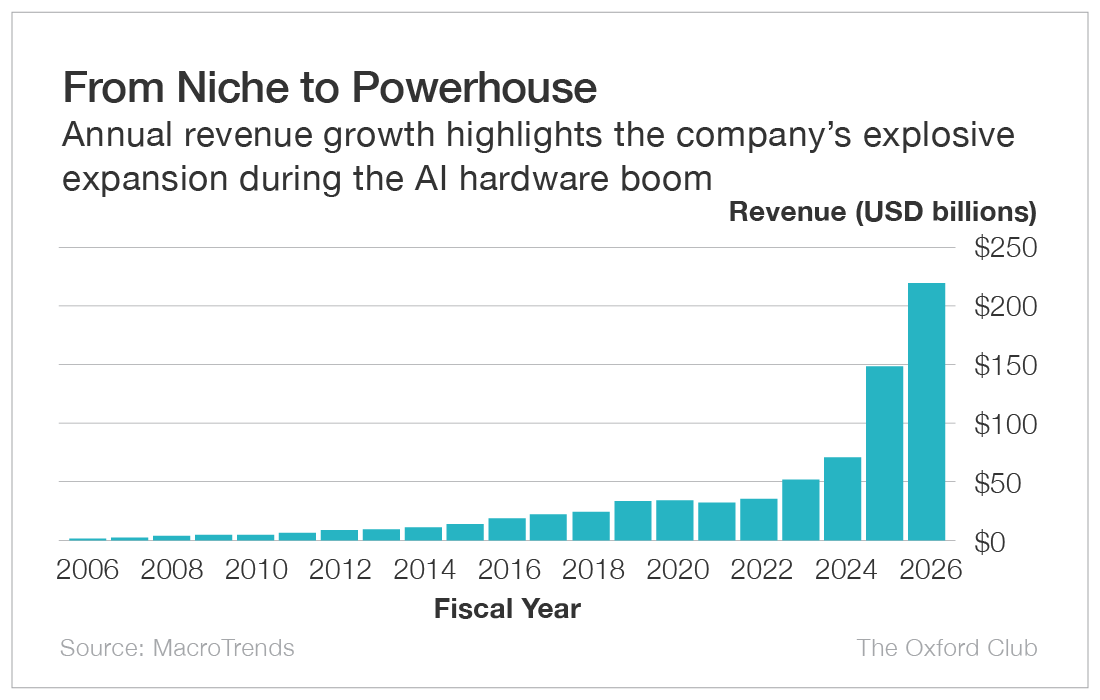
Consider the precedent Nvidia itself set. As it built its GPU platform for the AI era, annual revenue expanded from about $5 billion in 2016 to more than $215 billion by 2026. That growth curve illustrates just how powerful it can be to become essential infrastructure for a dominant platform.
Keysight is now wired into Nvidia’s next great platform – the one that unites AI and quantum. In a space where many competitors are still pre-profit, Keysight combines strong cash flow with a strategic seat at the table.
Nvidia is known for designing its own chips and software from the ground up. So why bring in an outside partner to handle quantum control?
Why Nvidia Needs Keysight (Not the Other Way Around)
Three practical reasons explain the decision…
- Specialized analog expertise. Quantum control is a demanding analog and radio-frequency engineering problem, not just a matter of digital logic. It requires ultra-clean signals, precise timing, and excellent signal quality at very high frequencies – exactly the kind of challenge Keysight has been solving for telecom, aerospace, and semiconductor customers for decades.
- Faster time to market. Nvidia wants NVQLink systems available to customers today, not years down the road. Building on Keysight’s existing hardware and software lets Nvidia deliver working hybrid systems far sooner than starting from scratch would allow.
- Broad ecosystem reach. Keysight already has relationships with many quantum hardware makers and national research labs. Using Keysight as a shared control layer makes it far easier for Nvidia to support different quantum chip technologies without rebuilding its software stack from the ground up each time.
When Nvidia envisions a world where every GPU server is hybrid – GPU power plus quantum power working together – someone has to certify and standardize that critical connection. Increasingly, that role belongs to Keysight.
Keysight’s 6G Edge With Nvidia
Quantum is not the only frontier where Keysight and Nvidia are aligning their efforts.
The two companies are also collaborating on AI-driven 6G wireless platforms, using Nvidia’s GPUs to model and test next-generation wireless networks before they are deployed in cities and factories around the world.
In this setup…
- Keysight provides RF test equipment, signal emulators, and precision measurement tools
- Nvidia supplies fast AI compute engines to model and optimize complex radio systems entirely in software
Early 6G trials have already demonstrated data speeds many times faster than today’s best 5G networks, and that added complexity only increases demand for the kind of precise, reliable testing tools that Keysight specializes in building.
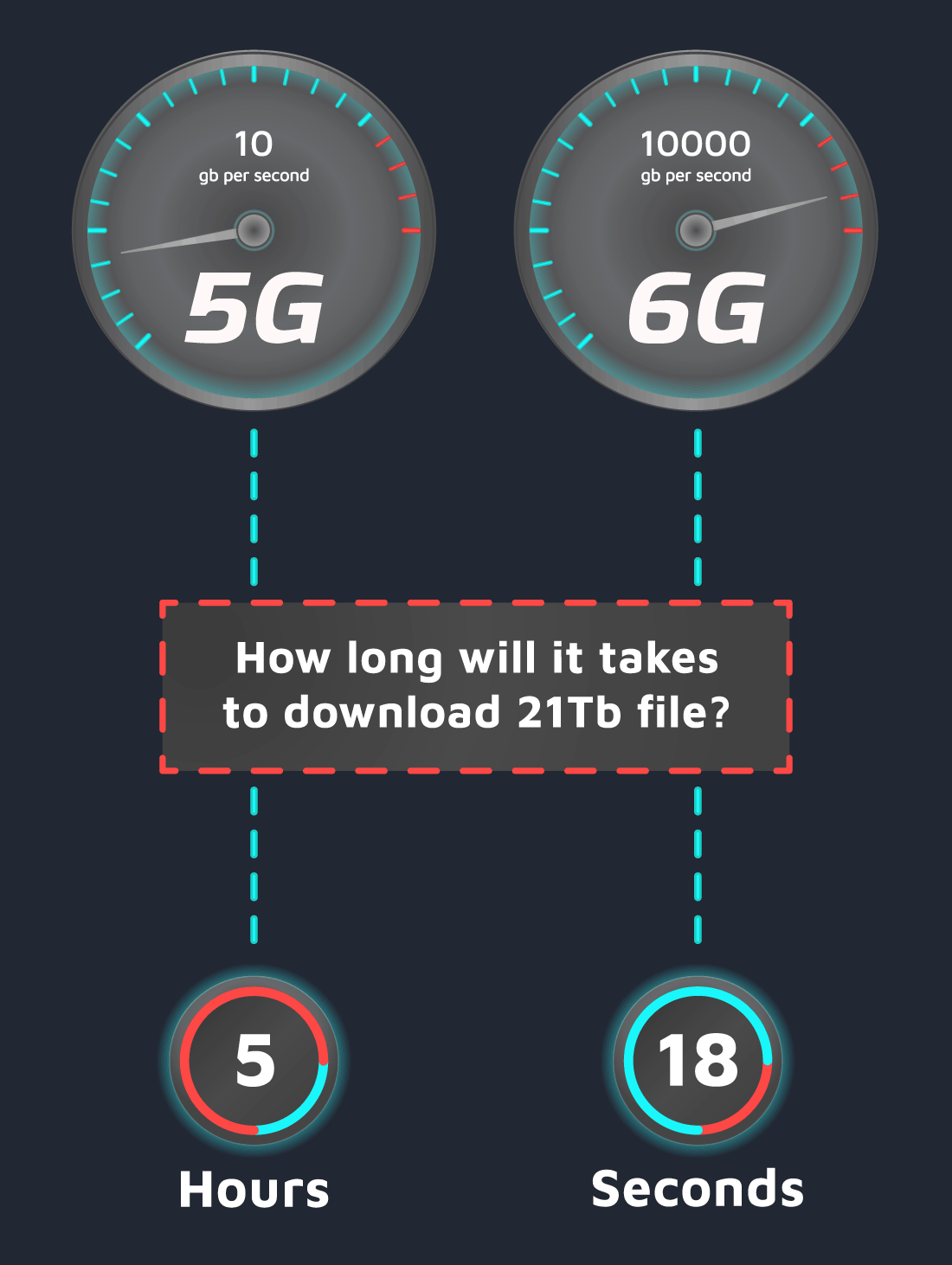
That positions Keysight as the go-to test partner for chipmakers, network equipment vendors, and wireless carriers preparing for 6G deployment over the next several years.
So even if quantum computing takes longer to mature than the biggest optimists expect, Keysight still holds a commanding position in several other Nvidia-adjacent growth markets, from AI data center validation to 6G and next-generation high-speed interconnects.
Hiding in Plain Sight
Despite the Nvidia partnership, the NVQLink role, the 6G collaboration, and a strong balance sheet, Keysight still trades primarily as a plain “instrumentation” stock in the eyes of most investors.
TV pundits and major financial outlets remain glued to the usual megacap names. They rarely stop to examine the quiet specialists that are actually making those giants’ most ambitious plans possible.
Yet that is historically where the most powerful gains tend to come from.
When Nvidia selected Super Micro Computer as a key GPU platform partner, that stock moved from relative obscurity to a Wall Street favorite over the following few years.
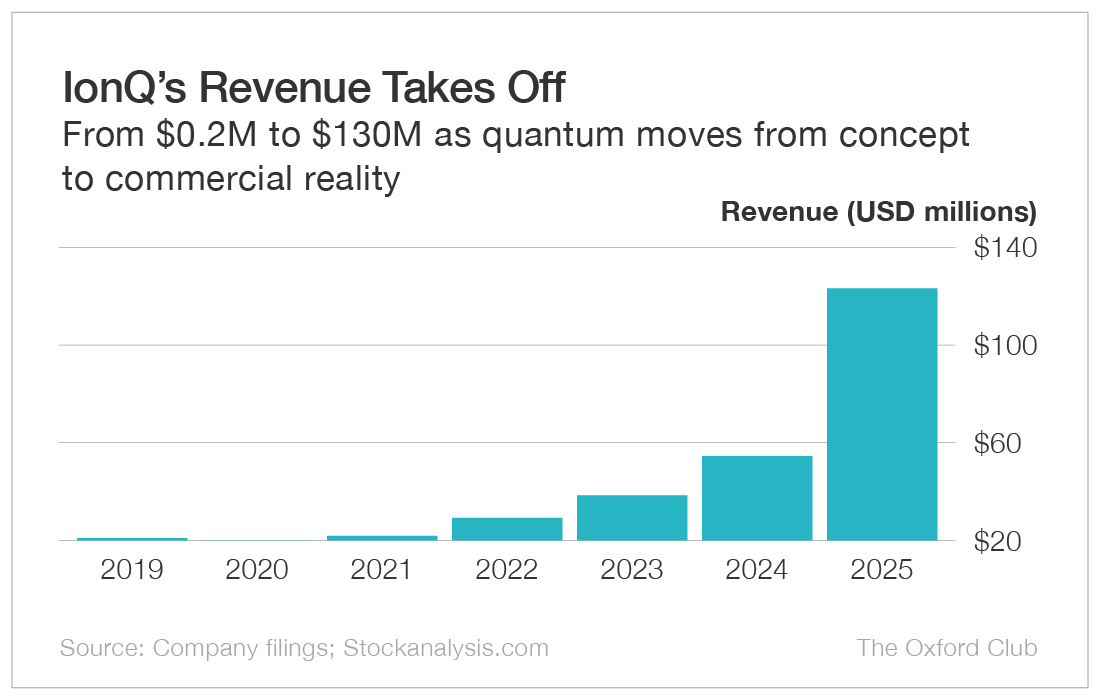
And when Nvidia announced its early collaboration with quantum computing firm IonQ, investors who got in early rode the stock to multi-bagger returns on the first wave of quantum excitement.
Now Nvidia has launched NVQLink, listed just five control-system partners, and placed hybrid quantum-AI at the center of its next decade of growth.
Yet Keysight still doesn’t trade as if it were a gatekeeper to the quantum era.
The gap between what Keysight actually does for Nvidia and how the market still labels it as just another test company is exactly where I see the opportunity.
How Keysight Meets My Quantum “Checkpoints”
When I assess a company tied to a major technology trend like quantum computing, I check four specific criteria. Keysight passes on all four counts.
- Tied to the leading platform. Nvidia is the undisputed leader in accelerated computing, and Keysight is wired directly into its quantum and 6G road maps through NVQLink, CUDA-Q, and AI-driven wireless test systems.
- Real, growing cash flow. More than $5 billion in annual revenue, nearly $850 million in net income, and roughly $1.4 billion in operating cash flow give Keysight the resources to fund its own growth and weather difficult markets.
- Not a commodity supplier. Keysight does not sell a generic, interchangeable part. It provides the control, test, and validation layer that the entire quantum-AI stack depends on – in applications where a single error can render the whole system useless.
- Undervalued upside. The market still prices Keysight as a basic test equipment company, assigning little or no premium to its embedded role in NVQLink, CUDA-Q, and the coming generation of hybrid quantum-AI data centers.
How to Position This in Your Retirement Portfolio
To be clear about what Keysight is and is not: This is not a tiny microcap lottery ticket.
It is a mid-to-large-cap engineering leader, and that reality comes with genuine trade-offs. You are unlikely to see the kind of 1,000% short-squeeze moves that a $500 million pure-play quantum startup might deliver off a single exciting headline.
What you can realistically expect is the kind of steady, multiyear run that happens when a sound, cash-rich company becomes essential infrastructure for the undisputed leader of a new era – and when Wall Street models, still priced on the old view of what Keysight is, finally adjust to reflect the new reality.
The math is simple and compelling. A $25,000 position that grows 10X becomes $250,000. At 20X, that same stake reaches $500,000. For a pre-retiree or retiree looking to extend their financial runway, gains of that magnitude can genuinely change the retirement picture.
Suggested Allocation Guide
Aggressive growth: 3% to 5% of portfolio. Meaningful exposure without too much concentration risk.
Balanced: 1% to 3% of portfolio. Good upside potential with steady risk controls in place.
Income-focused: 1% to 2% of portfolio. Adds a growth element to complement dividend-focused holdings.
Time horizon: 5 to 10 years. This is a long-term investment, not a trade. Think of it as owning a piece of the plumbing of the quantum age.
The Bottom Line
The quantum computing boom is real, it is substantial, and it is already in motion.
But you do not need to gamble on a startup or guess which quantum chip design will ultimately win the market.
Instead, you can invest in the firm that is becoming the essential control layer for the entire quantum industry – the firm that Nvidia and the U.S. Department of Energy are already counting on to make it all work.
That firm is Keysight Technologies.
Now that Nvidia has placed hybrid quantum-AI computing at the center of its long-term road map, Keysight is firmly along for the ride.
Its control systems will be driving qubits.
Its analyzers will be checking signals and validating critical links.
Its software will be built side by side with Nvidia’s CUDA-Q stack to keep these powerful machines stable, synchronized, and performing at their best.
And as we have seen time and again, when Nvidia selects a partner early in the development of a new platform, the investors who act early can earn truly life-changing returns.
For investors who want to build lasting retirement wealth from the next great technology shift, this may be one of the most important decisions of the decade.
The window is open right now. But based on everything I have seen in 30 years of doing this, it will not stay open forever.
Recommendation: Buy Keysight Technologies (NYSE: KEYS) at market.