 You are now logged out.

How to Tap Into the Government’s Hoard of $6 Silver
“Too many people miss the silver lining because they’re expecting gold.”
– Maurice SetterSilver is precious, gold is too,
I am precious, and so are you.
You help me and I’ll help you,
And together we will see it through.
– Girl Scouts Motto
For decades, I’ve built a reputation as the King of the Silver Dollar.
My first investment during the inflationary 1970s was a Morgan Silver Dollar. At the time, traditional investments in stocks and bonds were struggling through a long bear market.
Inflat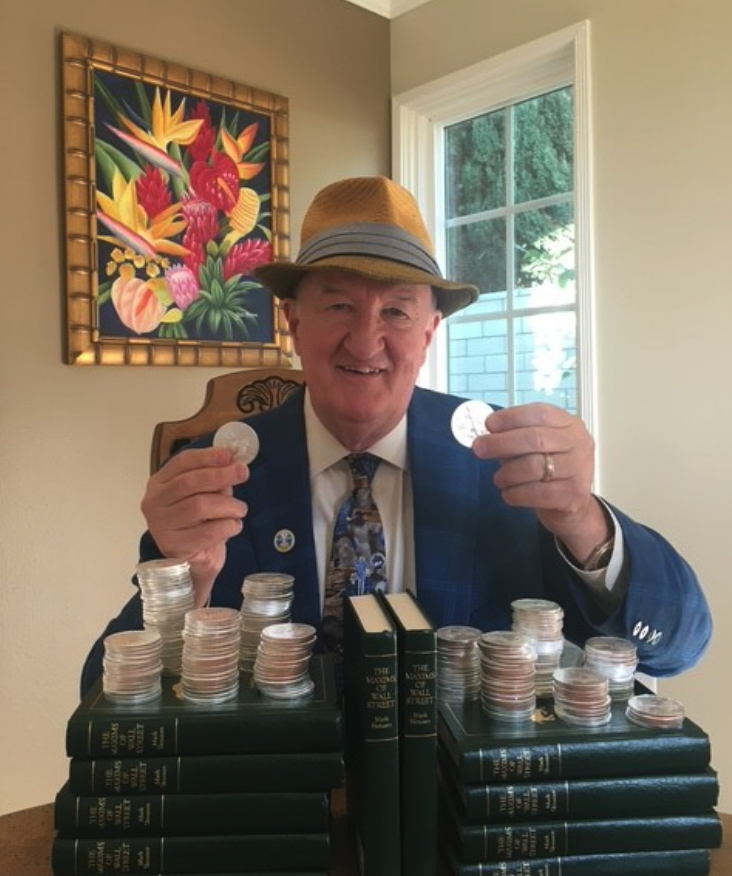 ion was rising, the dollar was weakening, and many Americans were searching for ways to protect their savings.
Gold and silver suddenly became all the rage.
President Richard Nixon had taken the United States completely off the gold standard in 1971. From that point forward, the dollar became a purely fiat currency – paper money backed only by the “full faith and credit” of the government.
Naturally, many investors became concerned about the long-term value of their money.
One of the bestselling books of that era was Harry Browne’s You Can Profit from a Monetary Crisis, published in 1974. Browne advised investors to buy precious metals and keep money in a Swiss bank account as protection against inflation.
Another author, Jerome Smith, published a book called Silver Profits in the Seventies. His prediction was simple and bold:
Silver would double… and then double again.
In fact, it did far better than that.
Silver rose from $1.29 an ounce to nearly $50 during the inflationary 1970s.
That’s nearly a 40-fold increase.
During that period, the popular slogan among investors was “Buy gold, buy silver, buy Swiss francs!”
I became a committed “gold bug,” but silver quickly became my investment of choice.
Silver was often called “the poor man’s gold.” It was far cheaper per ounce, widely available, and – at the time – deeply undervalued.
So I bought a bag of what coin dealers call “junk silver.”
These were ordinary U.S. coins – dimes, quarters, and half dollars – minted before 1965.
They looked like pocket change.
But they contained something incredibly valuable.
Real silver.
At the time, those coins circulated by the millions. Today, many investors don’t realize that these coins still exist – and that they may represent one of the simplest ways to accumulate precious metals.
In fact, some of the smallest coins in circulation during that era – the humble silver dime – now contain enough silver that they trade for around $6 or more.
Which is why I like to call them “The Government’s $6 Silver Coins.”
But to understand why these coins matter, we have to go back to the origins of money itself.
The Story of the American Silver Dollar
Long before paper currency became common, societies around the world relied on precious metals for commerce.
Silver coins were the most widely used form of money among the Greeks, the Romans, and the British.
The British currency itself – the pound sterling – originally referred to a pound weight of sterling silver.
Even the word “dollar” has silver roots.
The dollar originated with the famous Spanish silver dollar, which was based on a coin minted centuries ago in Joachim’s Valley in Bohemia. These coins were called thalers, and over time the name evolved into the word “dollar.”
In colonial America, Spanish silver dollars were widely used. They were often cut into eight pieces to make smaller transactions. These pieces became known as “pieces of eight.”
Even today, we still hear remnants of that language in everyday expressions like “two bits” for a quarter.
America’s Long History With Silver Money
The United States Mint began producing its own silver dollars in 1794.
These coins typically featured Lady Liberty on the front and an eagle on the back, symbols that reflected the young nation’s ideals of freedom and strength.
Over the next century, the U.S. Mint produced millions of silver coins, including several famous designs:
- Seated Liberty dollars (1836–1873)
- Morgan silver dollars (1878–1904, 1921)
- Peace dollars (1921–1935).
My personal favorite has always been the Morgan silver dollar, designed by chief engraver George T. Morgan.
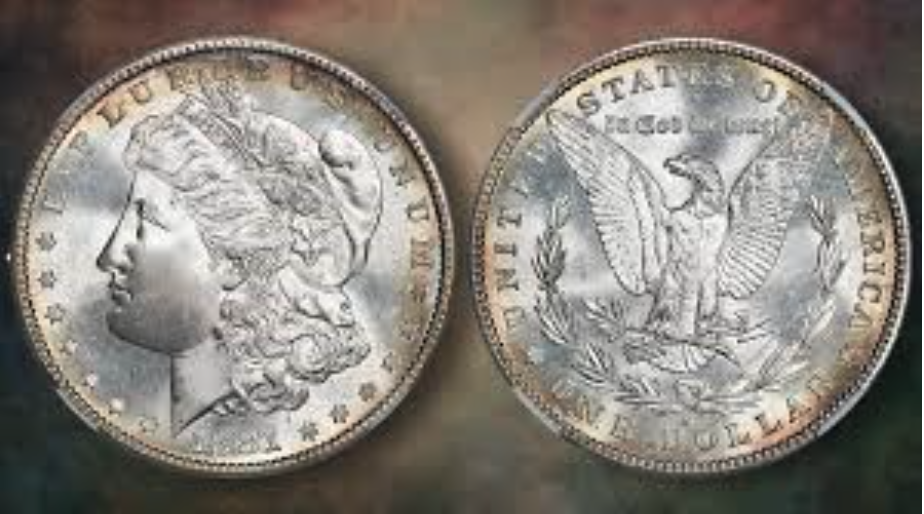
Each Morgan dollar contains 0.773 troy ounces of silver and is, in my opinion, one of the most beautiful coins ever minted.
Unfortunately, a large percentage of these coins no longer exist.
In 1918, the U.S. government melted down more than 270 million silver dollars, leaving only a fraction of the original mintage in circulation today.
Paper Money Versus Hard Money
The Founding Fathers were deeply skeptical of paper money.
Their distrust came from painful experience.
During the American Revolution, the Continental Congress issued large quantities of paper currency known as “Continentals.”
The result was runaway inflation.
By the end of the war, these notes had lost more than 90% of their value.
The phrase “not worth a Continental” became a common expression.
Because of this experience, the Constitution included a remarkable clause in Article I, Section 10:
“No state shall… coin money; emit bills of credit; make anything but gold and silver coin a tender in payment of debts.”
In other words, the Founders envisioned a monetary system based primarily on gold and silver coins.
For much of the 19th century, the United States operated on a bimetallic standard, using both gold and silver as money.
Paper currency existed, but it was simply a warehouse receipt for precious metals stored in the Treasury.
The Silver Certificate System
One example of this system was the silver certificate.
These notes were issued by the U.S. Treasury beginning in the late 19th century. Printed across the face of each certificate were these words:
“This certifies that there has been deposited in the Treasury of the United States of America one silver dollar payable to the bearer on demand.”
In other words, if you possessed a silver certificate, you could walk into a Treasury office and exchange it for an actual silver coin.
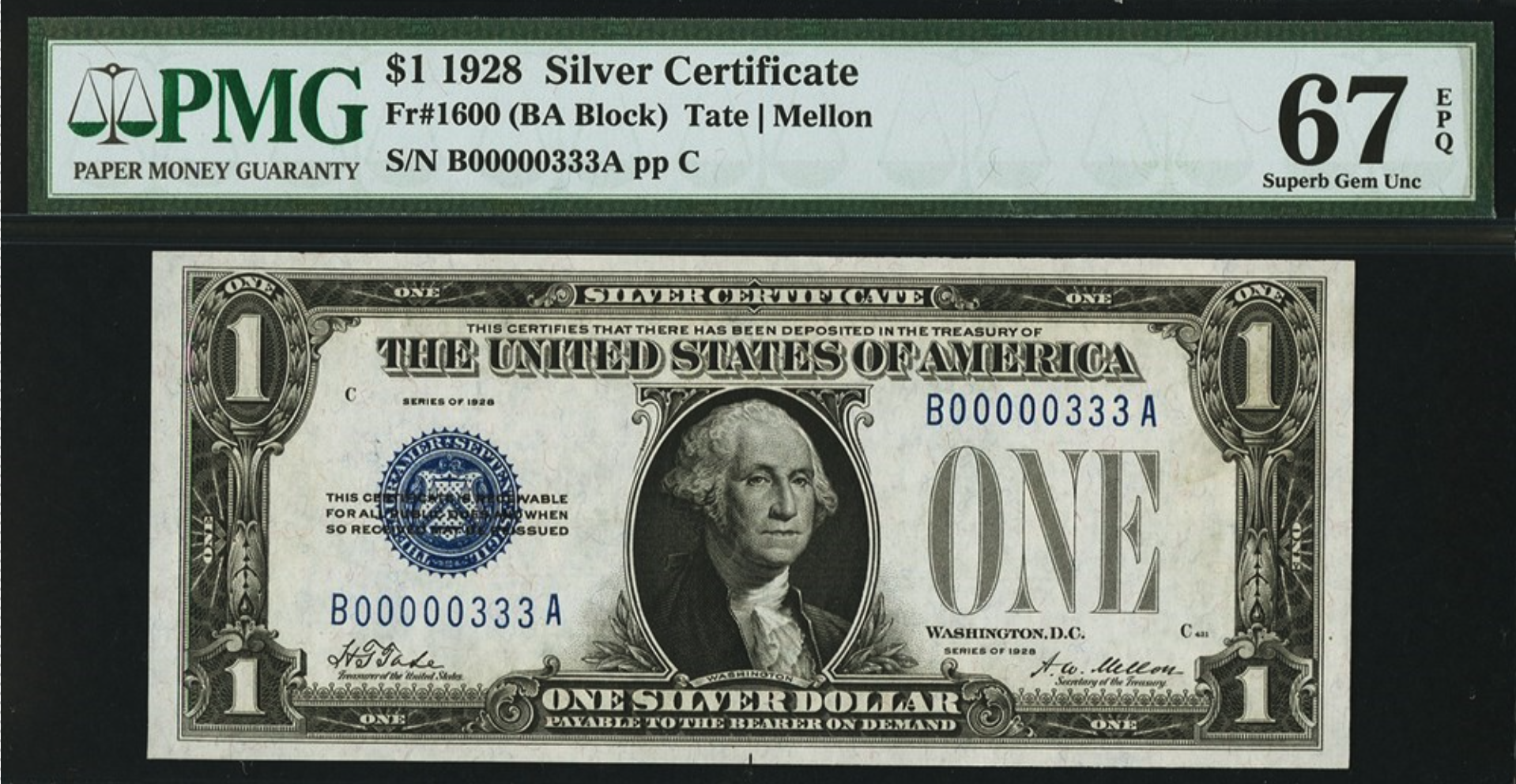
The system worked because the government maintained sufficient silver reserves to back the currency.
But eventually that system came under pressure.
The Great Silver Shortage
After World War II, inflation gradually pushed the price of silver higher.
By the early 1960s, the metal inside a silver coin was approaching the coin’s face value.
For example:
A silver dollar contains about 0.77 ounces of silver.
If silver rose above $1.29 per ounce, the metal inside the coin would be worth more than one dollar.
That created an obvious opportunity.
Speculators began hoarding silver coins and melting them down for their metal value. Dimes, quarters, half dollars, and silver dollars began disappearing from circulation.
The U.S. Mint tried to keep up with demand by dramatically increasing coin production. But the problem only got worse.
Finally, in 1965, the government made a historic decision. It eliminated silver entirely from dimes and quarters and replaced it with cheaper metals.
From that point forward, American pocket change contained no precious metal at all.
Millions of silver coins were melted down. Millions more were quietly stored away by investors.
The Hidden Treasure of Pre-1965 Coins
Those old coins – dimes, quarters, and half dollars minted before 1965 – contain 90% silver.
Today investors refer to them simply as “90% silver coins.”
Coin dealers sometimes call them “junk silver” – but there’s nothing junky about them!
These coins contain a surprisingly large amount of silver.
Even the smallest coin – the dime – contains enough silver that it can sell for around $6 or more depending on the price of silver.
That’s why I call them:
“The Government’s $6 Silver Coins.”
Think about that for a moment.
A coin that once purchased a stick of gum… now contains nearly a dollar’s worth of silver for every penny of face value.
My Long Love Affair With Silver
During the 1970s, I became deeply involved in the precious metals movement.
In 1975, after leaving the Central Intelligence Agency, I became managing editor – and later editor-in-chief – of The Inflation Survival Letter.
The newsletter focused heavily on strategies for protecting wealth from inflation.
And recommending gold and silver coins was a central part of that strategy.
In 1977, I wrote a full-page advertisement encouraging investors to buy silver coins. The ad featured a prominent coin dealer holding several hundred silver dollars.
At the time, the idea seemed almost radical. But history proved the point.
Silver exploded upward during the inflationary 1970s, eventually reaching $50 per ounce.
Then came the long bear market…
From 1980 to roughly 2000, precious metals languished while stocks and bonds enjoyed one of the greatest bull markets in history.
Ironically, those decades turned out to be an excellent opportunity to accumulate silver quietly at low prices.
And that’s exactly what I did.
I continued buying silver coins and using them as teaching tools, gifts, and demonstrations of sound money.
For many years I carried silver dollars in my pocket.
I would hand them to friends, students, waiters, hotel clerks, and colleagues as a reminder of what real money looks and feels like.
There’s something powerful about holding a silver coin in your hand.
It connects you to centuries of monetary history – and reminds you that money once had intrinsic value.
Why Silver Still Matters Today
Today silver occupies a unique place in the global economy.
Unlike gold, which is held primarily as a monetary asset, silver serves two roles simultaneously.
It’s an industrial metal and a monetary metal.
Indeed, more than half of global silver demand comes from industrial uses, including…
- electronics
- solar panels
- electric vehicles
- medical devices
- water purification systems.
At the same time, silver continues to attract investors seeking protection from inflation and currency instability.
That combination – industrial demand and monetary demand – makes silver far more volatile than gold.
When the global economy is strong, industrial demand pushes silver prices higher. When economic growth slows, industrial demand weakens and prices may fall.
At the same time, monetary demand for silver rises during periods of inflation or financial stress.
This push-and-pull dynamic can produce significant price swings.
But it also creates opportunities.
Over the long term, silver has delivered roughly 6% to 7% annual returns, even without paying interest or dividends.
And historically, silver has proved to be an effective hedge against inflation.
For example…
In the early 1960s, a hardcover bestselling book might cost about $3. In other words, three silver dollars.
Today a hardcover book might cost $30 or more in paper money. Yet the silver inside those same three silver dollars could easily purchase three copies of the book!
In other words, over the long run, silver has quietly preserved purchasing power.
Why the “$6 Silver Dime” Matters
Which brings us back to the humble silver dime.
Before 1965, millions of these coins circulated through the American economy.
People used them to buy coffee, candy, newspapers, and bus fares.
Today those same coins contain enough silver to trade for around $6 each.
What was once small change has become a tiny storehouse of precious metal.
And here’s the remarkable part:
Millions of these coins still exist.
They sit in coin collections, dealer inventories, and private holdings across the country.
Investors can still buy them today.
In the next section, I’ll show you why these coins often offer a better deal than modern bullion coins – and how premiums can make a surprisingly big difference in your long-term returns.
Why Premiums Matter More Than Most Investors Realize
Once investors understand the appeal of pre-1965 silver coins, the next question naturally becomes “Why buy these coins instead of modern silver bullion?“
After all, the U.S. Mint produces beautiful 1-ounce American Eagle silver coins every year. I’ve been buying them for decades and have often given them away as gifts, rewards, and teaching tools.
But when it comes to pure investment value, one critical factor often gets overlooked…
The premium.
In the precious metals market, the premium is the amount you pay above the metal’s intrinsic value, or the “spot price.”
Every coin dealer charges a premium because they must cover…
- minting costs
- shipping and insurance
- storage and handling
- dealer profit.
But the size of that premium can vary dramatically depending on the product. And that difference can have a significant impact on your returns.
The Premium Problem
Consider the American Silver Eagle.
It’s one of the most popular silver bullion coins in the world. Each coin contains exactly 1 troy ounce of pure silver, and it is legal tender with a nominal face value of $1.
But because these coins are so popular, they often carry large premiums.
In many markets, investors pay 20% or more above the spot price for American Eagles.
By contrast, pre-1965 silver coins – our so-called “junk silver” – usually trade at much smaller premiums.
Often 5% to 10% above spot.
That difference may not sound like much, but it matters more than many investors realize.
Let’s look at a simple example.
Assume silver is trading at $30 an ounce. (As I write, it’s trading much higher than that – but this is just an example.)
If you buy a Silver Eagle with a 20% premium, you might pay $36 per coin.
Now suppose you buy 90% silver coins with a premium of 8%.
You might pay the equivalent of $32.40 per ounce of silver.
Now let’s see what happens if silver rises to $40 per ounce.
Here’s how the two investments compare.
| Investment | Purchase Price | Value at $40 Silver | Profit |
| Silver Eagle | $36 | $40 | $4 |
| 90% Silver Coins | $32.40 | $40 | $7.60 |
The investor who bought the lower-premium coins earns nearly twice the return.
Why?
Because they paid less upfront for the same underlying metal.
To provide you with a bit more context in terms of today’s prices, I reached out to longtime Oxford Club friend Rich Checkan, the president and COO of Asset Strategies International – one of the dealers I recommend later in this report.
And he actually said that junk silver is being sold below the spot price of silver right now.
Here’s what he said…
Right now, we can offer junk silver to Oxford Club Members roughly 12.8% cheaper than Silver American Eagles.
Silver Eagles are selling at 11.8% above spot silver. Junk silver is selling a little over 1% below spot silver.
With a spot silver price of $82.54 per ounce (as of this writing), $100 face value of junk silver will cost $5,812. That equates to 71.5 troy ounces of silver.
At the same spot price, if you purchased 71 Silver American Eagles, it would cost you $6,556.85.
Prices are indicative, but the savings by buying junk silver is massive… no matter how you slice it.
Can you see how the premium can make a huge difference?
At current prices (which will obviously change depending on when you read this report), you can buy 71.5 ounces of junk silver from Asset Strategies International for $5,812… while the same amount of Silver American Eagles would cost you almost $750 more.
The Break-Even Difference
Premiums also affect how long it takes to break even.
If you pay $36 for an ounce of silver when spot is $30, silver must rise to $36 before you even begin making a profit.
But if you paid $32.40, silver only needs to rise slightly above that level before you begin earning gains.
In other words, lower premiums reduce your break-even point.
And over time, that can make a significant difference in total returns.
Liquidity Advantages
Another benefit of 90% silver coins is liquidity.
Because these coins were once widely circulated, they are instantly recognizable to dealers. Many coin shops buy and sell them by face value, not by individual coin type.
For example, dealers often quote prices for..
- $10 face value rolls
- $100 face value bags
- Larger “junk silver” lots.
This standardized pricing makes buying and selling relatively straightforward.
How to Buy at the Right Price
Once you decide to accumulate silver coins, the next question becomes simple…
Where should you buy them?
There are several good options, each with distinct advantages and disadvantages.
Reputable National Dealers
Some investors prefer buying from large national coin dealers.
These companies operate large inventories and typically offer competitive pricing.
Here are a few I recommend…
David Hall Rare Coins | https://davidhall.com/
APMEX | https://www.apmex.com/
JM Bullion | https://www.jmbullion.com/
Asset Strategies International | https://www.assetstrategies.com/
Some of these firms have operated for decades and maintain strong reputations within the industry.
They typically provide transparent pricing, secure shipping, and insured delivery.
However, prices can still vary widely between dealers. So it pays to shop around.
Local Coin Shops
Local coin dealers are another excellent source of silver coins.
Buying locally offers several advantages. For instance, you get immediate possession. There are no shipping costs. And you can inspect the coins in person.
Developing a relationship with a trustworthy local dealer can also be valuable over the long term.
One thing to keep in mind, though, is that local shops may sometimes charge slightly higher prices than large online dealers.
Again, comparison shopping is wise.
Coin Shows
Coin shows are another fascinating way to buy silver.
Major cities host coin conventions several times a year, attracting dealers from across the country.
Attending a coin show offers two advantages: It provides a chance to learn about the market and see a wide variety of coins… and when you’ve got multiple dealers clamoring for a sale, it often produces very competitive prices.
I often recommend attending at least one coin show simply for educational purposes.
You may find it difficult to resist buying something once you see all the options available.
What to Ask For
When buying 90% silver coins, you don’t need to focus on specific rare dates or collectible varieties.
Instead, simply ask for “90% silver coins by face value.”
Dealers usually sell them in rolls or bags.
Common examples include…
- Roosevelt dimes (1946–1964)
- Mercury dimes (1916–1945)
- Washington quarters (1932–1964)
- Walking Liberty half dollars (1916–1947)
- Franklin half dollars (1948–1963)
- Kennedy half dollars (1964).
All of these coins contain 90% silver.
For investment purposes, their value comes primarily from their metal content, not their rarity.
How to Calculate the Premium Yourself
Understanding premiums is simple once you know the formula.
Premium = (Purchase Price – Melt Value) ÷ Melt Value
For example:
Suppose $1 face value of coins contains $21 worth of silver.
If a dealer charges $22, here’s how that works out…
Premium = $1 ÷ $21
Or about 4.7%.
That’s a very reasonable premium in the precious metals market.
What to Avoid
When buying silver coins, investors should be cautious about certain products.
Many coin dealers prefer selling collectible coins – like proof coins, rare-date coins, highly graded collectible coins, commemorative issues – because the profit margins are higher.
These products can be interesting for collectors, but they often carry very large premiums.
For investors primarily interested in silver exposure, these premiums may significantly reduce returns.
I generally recommend focusing on common-dated coins and bullion coins instead.
Spotting Counterfeits and Dealer Tricks
Precious metals have always attracted fraudsters.
Fortunately, counterfeiters usually target high-value coins such as gold coins or rare collectibles. Pre-1965 silver coins are actually among the hardest coins to counterfeit.
Why?
Because their exact specifications are well known.
Even small variations in weight or composition can easily reveal a fake.
Still, investors should know a few simple tests.
The Weight Test. Silver coins have precise weights. A standard silver dime weighs about 2.5 grams, while a quarter weighs 6.25 grams. Significant deviations from these weights can indicate a counterfeit coin.
The Sound Test. Silver produces a distinctive ringing sound when dropped gently on a hard surface. Many investors call this the “silver ping.” Modern base-metal coins produce a dull thud instead. Once you’ve heard the difference, it’s difficult to mistake.
The Magnet Test. Silver is not magnetic. If a coin sticks to a magnet, it almost certainly contains another metal. This quick test can reveal many counterfeit coins immediately.
But once you have your silver in your possession, what do you do with it?
Storage Strategy
There are several storage options to consider…
Home Storage. Many investors choose to store silver coins at home. That way you have immediate access to your silver, and there are no storage fees. However, home storage also carries risks. Precious metals are attractive to thieves because they are portable and easily resold. So anyone storing metals at home should consider look into a high-quality safe or secure hiding locations. You should also limit the number of people who know about your holdings.
Safe Deposit Boxes. Another popular option is a bank safe deposit box. These boxes offer strong security and relatively low annual costs. The problem is, banks limit your access to business hours. And during financial crises, some banks may temporarily close. Investors must weigh convenience against security.
Private Vault Storage. For larger holdings, professional vault services may offer the best solution. These facilities provide advanced security systems, full insurance coverage, and audited storage. Some international mints, such as the Perth Mint in Australia, even offer storage programs for precious metals.
Insurance Considerations
Many investors assume their homeowners insurance covers precious metals.
In reality, most policies provide very limited coverage.
Investors storing significant amounts of bullion at home should consider special add-ons to their policy or separate precious metals insurance policies.
These policies can provide peace of mind in case of theft or damage.
Selling Strategy: How and When to Cash In Your Silver
So let’s fast-forward a bit.
You’ve owned your silver for a while, and now you want to sell to lock in a potential profit.
Let’s cover how to sell – and, just as important, when.
Silver, like all commodities, goes through cycles. Prices can rise dramatically during periods of inflation or financial crisis… and then fall back during periods of economic stability.
Understanding these cycles can help investors make better decisions about when to take profits.
Find a Buyer Who Pays Closest to Spot
When it comes time to sell your silver coins, you’ll typically receive the best prices from local coin dealers, national bullion dealers, coin shows, and conventions.
Most dealers quote prices based on percentage of the current silver spot price.
For example, a dealer might offer 98% of spot for common bullion coins… or 95% to 98% of spot for 90% silver coins.
Competition between dealers often improves the prices you receive, so it pays to obtain multiple quotes before selling large quantities.
Local coin shops often provide the simplest transactions because they can pay immediately.
However, large national dealers sometimes offer competitive buyback programs as well.
Premium Cycles: The Hidden Opportunity
Just as premiums affect buying decisions, they also influence selling opportunities.
During periods of strong demand – especially during financial crises – premiums on physical silver coins can rise dramatically.
We saw this happen during several recent market panics.
Investors rushed to buy physical silver, but supply could not keep up with demand. As a result, premiums surged.
In some cases, dealers paid well above the melt value of coins simply to replenish their inventory.
This means investors who bought coins during calm periods – when premiums were low – sometimes had the opportunity to sell them later at higher premiums than they originally paid.
In other words, investors could benefit from rising silver prices and expanding premiums.
That combination can produce very attractive returns.
Taxes on Precious Metals
Another consideration when selling silver is taxes.
In the United States, precious metals are generally classified as collectibles for tax purposes.
This means long-term capital gains on physical metals may be taxed at rates of up to 28%, depending on your income bracket.
Short-term gains – metals held for less than one year – are taxed at ordinary income rates.
Because tax laws change over time, investors should consult a qualified tax professional before making large sales.
Realistic Expectations for Silver Investors
Silver has a long and fascinating history as both a monetary and industrial metal.
But investors should approach it with realistic expectations.
Silver can be volatile.
It has experienced several powerful bull markets over the past century – but also long periods of stagnation.
The Three Major Bull Markets in Silver
The first major bull market occurred during the inflationary 1970s.
As inflation surged and the dollar weakened, investors flocked to precious metals.
Silver rose from roughly $1.29 an ounce in the early 1970s to nearly $50 by 1980.
That extraordinary run was fueled in part by the famous attempt by the Hunt brothers to corner the global silver market.
Their massive purchases drove prices sharply higher.
Eventually regulators intervened, raising margin requirements and forcing liquidation of futures contracts.
Silver prices collapsed soon afterward.
The second major silver boom occurred around 2011, when concerns about the global financial crisis pushed silver briefly back toward the $50 level again.
And as I write this report, we are witnessing renewed interest in precious metals driven by inflation concerns and rising demand from industrial uses – such as solar energy and electric vehicles.
What Would It Take for Silver to Double?
Investors often ask what would need to happen for silver prices to double.
The answer depends largely on macroeconomic conditions.
Silver tends to perform best during periods of…
- rising inflation
- currency instability
- strong commodity markets
- financial crises.
If inflation continues rising and global demand for industrial metals remains strong, silver could potentially revisit the levels seen during previous bull markets.
But investors should also be prepared for volatility along the way.
Portfolio Allocation: The Oxford Club Perspective
While I have always been a strong advocate for owning precious metals, it’s important to maintain balance in your investment strategy.
The Oxford Club emphasizes diversification through its Pillars of Wealth framework.
One of those pillars includes precious metals as a form of portfolio insurance.
Rather than concentrating heavily in metals, the Club generally recommends allocating about 5% of a diversified portfolio to gold and silver.
This modest allocation provides exposure to precious metals while still allowing the majority of your portfolio to remain invested in productive assets, such as stocks, real estate, and income investments.
In other words, precious metals serve as financial insurance, not the entire investment strategy.
Silver coins can play an important role within that allocation.
My Creative Uses for Silver Coins
Over the years I’ve discovered that silver coins serve purposes far beyond simple investment.
Like I mentioned earlier, they can also be wonderful teaching tools, gifts, and reminders of sound money.
I’ve used them in countless ways.
The $6 Silver Dime Demonstration
One of my favorite demonstrations involves the humble silver dime, which we have already discussed in this report.
At investment conferences and MoneyShows, I would announce that anyone who came to our booth could receive a genuine pre-1965 silver dime.
Hundreds of people would line up.
I would then explain that the dime they received – originally worth ten cents – now contained roughly $6 worth of silver.
It was a simple but powerful lesson about inflation.
Over time, paper money loses value. But precious metals preserve purchasing power.
Giving Silver as Gifts
For many years, I enjoyed giving away silver coins to friends, colleagues, and students.
Silver dollars make memorable gifts for any occasion.
There’s something unique about receiving a real silver coin.
It’s tangible. It’s beautiful. And it carries centuries of monetary history in your hand.
I’ve even used silver coins as tips.
For many years a bellhop at the New Orleans Hilton Hotel greeted me every time I attended the annual investment conference there.
I gave him a silver dollar each year.
He remembered me for decades.
A Teaching Tool in the Classroom
Remember the “sound test” I mentioned earlier?
Well, as a professor, I’ve often used silver coins to illustrate economic principles – by comparing the sound of today’s coins to silver.
During lectures about the history of money, I’d ask a student to drop four modern quarters on a desk.
Then I dropped a silver dollar beside them.
The difference in sound is unmistakable.
The modern coins produce a dull clink, while the silver coin rings clearly.
That simple demonstration reminds students that money once had real substance.
Final Thoughts: Gresham’s Law at Work
The story of silver coins illustrates one of the most famous principles in monetary economics: Gresham’s Law.
The law states that “Bad money drives out good.”
When two forms of money circulate together – and one is more valuable than the other – people tend to hoard the more valuable money.
That’s exactly what happened with American silver coins.
Once the metal inside those coins became worth more than their face value, they disappeared from circulation.
Today we are left primarily with paper currency.
Meanwhile, the old silver coins have quietly accumulated value in vaults, collections, and private savings.
A dime that once bought a newspaper now contains many times its original purchasing power.
Which brings us back to the central idea of this report.
Millions of these coins still exist.
They are relics of America’s long monetary history.
And they represent a simple way for investors to own a tangible asset that has preserved value for centuries.
As the old saying goes…
In every cloud, there’s a silver lining.
And sometimes…
That silver lining comes in the form of a humble coin once worth only 10 cents.