 You are now logged out.

Apple’s Secret Robotics Partner
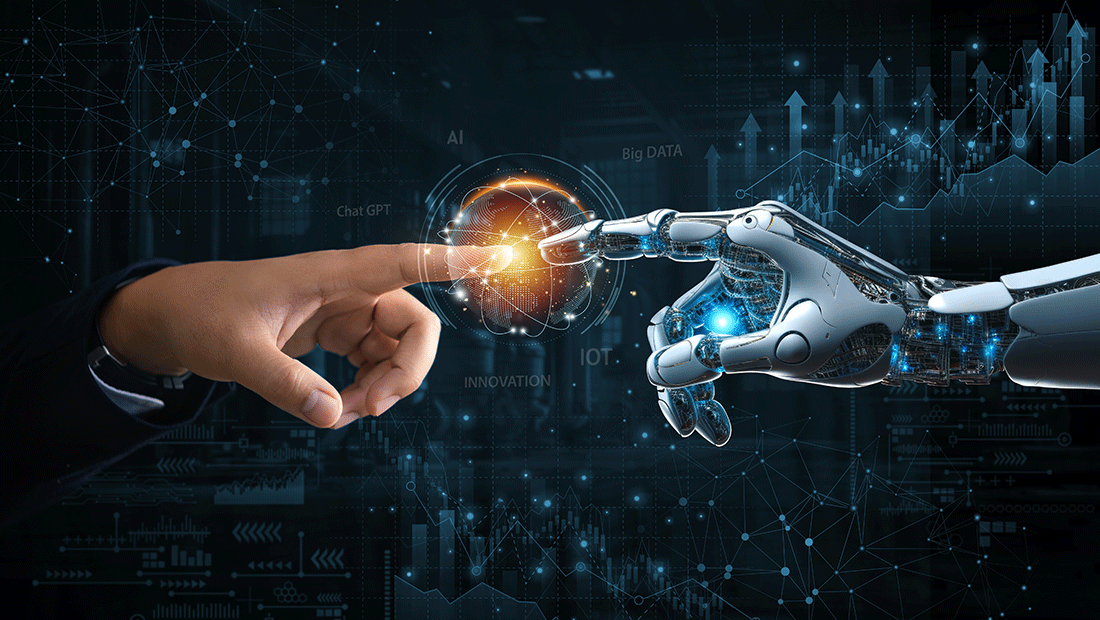
Apple has spent decades doing one thing better than anyone: taking complex technology and making it simple enough for everyday people to love.
The company did it with the personal computer, the smartphone, and the smartwatch.
Now Apple is turning that same instinct toward robots.
The company has been quietly building a robotics program for years. Engineers who once worked on the iPhone and Apple Watch have shifted to this new effort. Apple’s leadership has spoken publicly about the next wave of computing – one that steps off the screen and into the physical world.
The vision is bold: a machine that can move through your home, recognize what’s around it, and take useful action. Not a toy or a factory arm. A personal robot assistant – elegant, affordable, and trusted enough to share your living space.
And no matter how you feel about the idea of robots under your roof, there’s an enormous market for this technology.
Morgan Stanley projects humanoid robots alone could represent a $5 trillion opportunity by 2050. Citigroup puts the figure even higher, at $7 trillion. Nvidia’s Jensen Huang has called robotics a $50 trillion industry in the making.
Apple wants to own the consumer end of that market. And everything the company does suggests it’s serious.
In this report, I’ll show you why robots are going mainstream faster than most people expect. I’ll show you Apple’s vision – along with the one technical robotics problem the company can’t solve on its own.
Finally, I’ll tell you about a small company that can solve it. It’s a stock that currently trades for a fraction of what it could be worth if Apple’s big bet pays off.
It’s Already Happening
You don’t need to wait for Apple to prove that robots are going mainstream. The evidence is here now.
Amazon is deploying hundreds of thousands of warehouse robots. The company’s Proteus and Sequoia systems move goods with zero human touch. And Amazon has now introduced Digit – a humanoid robot designed to work alongside people on the floor.
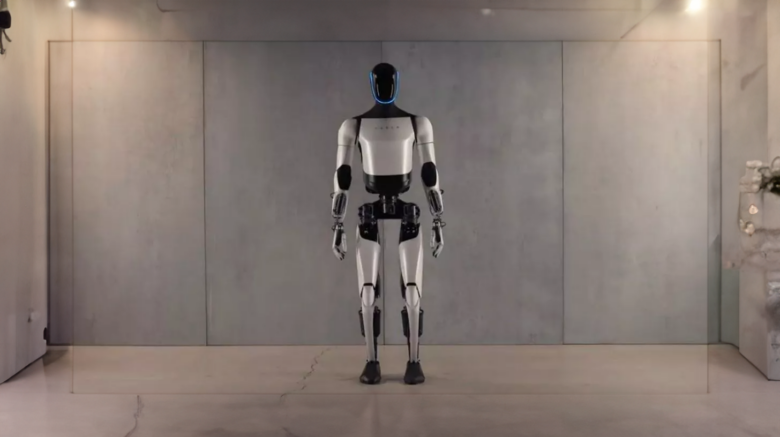
Tesla is mass-producing Optimus, its humanoid robot, and CEO Elon Musk has said it will eventually outsell the car business. Tesla has already put Optimus to work inside its own factories.
Figure AI, a startup backed by Microsoft, Nvidia, and Jeff Bezos, recently signed a deal to deploy humanoid robots at BMW manufacturing plants.
Goldman Sachs raised its humanoid robot forecast sixfold, to $38 billion by 2035.
When you have a major Wall Street bank revising its outlook because the technology is moving faster than expected, it’s time to pay attention.
Robots are no longer a decade away.
They are here – right now. And the biggest companies in the world are racing to own the category.
Apple is one of them. And it wants to win.
The Vision Problem That Still Needs Solving for Robots
Here’s the challenge Apple faces.
A useful robot needs to see and understand the world around it – in real time, without any lag. Imagine a robot in your kitchen. It spots a spill on the floor. The robot needs to recognize what it’s looking at, decide how to respond, and act – all in a fraction of a second.
Today, most robots can’t do that on their own. They rely on distant data centers to process what their cameras capture. The robot sends the image out, the server thinks about it, and the answer comes back. That round trip takes time. In a fast-moving environment, that lag is dangerous.
Apple’s answer is to push the thinking inside the device itself. No cloud required. The robot’s brain lives in the machine, processes what it sees on the spot, and responds immediately.
Apple has two of the three pieces it needs to do this.
First, it has its own chips – among the most powerful processors ever built for consumer devices. These handle high-level tasks like planning and language.
Second, it has manufacturing partners who can build the physical body of the robot.
What Apple does not have – and cannot build quickly on its own – is the third piece: a compact, low-power chip that turns camera images into real-time understanding. A chip that sees what the robot sees, makes sense of it instantly, and does all of this on a battery small enough to fit inside a consumer product.
This chip is not only the missing piece – it’s the most important one.
And the thing is, Apple can’t just build this chip from scratch overnight…
Why Apple Has No Other Option
Vision chips are not general-purpose processors. They require years of tuning, field testing, and software development before they perform reliably at scale.
And Apple needs a partner whose chip meets very specific demands…
The chip has to process multiple high-definition video streams at the same time. It must run AI models on top of those streams to interpret what the camera sees. And the chip needs to do all of this while drawing so little power that a battery can sustain it for hours.
That combination – high performance, low power, and built-in AI – is extraordinarily hard to achieve. Very few companies in the world have cracked it.
Ambarella Inc. (Nasdaq: AMBA) is one of them. In fact, it may be the best one.
Ambarella has spent the last decade building exactly this kind of chip. The company walked away from commodity video hardware and rebuilt itself around what it calls “edge AI vision” – chips that don’t just capture images, but understand them, right on the device.
No one told Ambarella to do this. Management saw where the market was heading and made a deliberate bet. And it’s now paying off.
How the Technology Works
Here’s what makes Ambarella’s chips special – and why a company like Apple would have a hard time walking away from them.
A standard camera chip captures images and passes them along. That’s it.
Ambarella’s chips do something entirely different: They process the image, run an AI model on top of it, and return a result – all before the data ever leaves the device.
Think of it this way…
A basic robot might detect: “there is an object.” An Ambarella-powered robot might detect: “there is a child carrying a glass of juice near the kitchen counter.” The difference is not just accuracy. It’s the level of understanding.
And that level of understanding is what separates a useful robot from a dangerous one.
The key is Ambarella’s CVflow chip line. These processors can run complex AI models – the same kind of models that power ChatGPT and image-recognition tools. And it all happens directly on-device, using a fraction of the energy a server would require.
The practical result: A robot powered by Ambarella’s chips can see, understand, and respond – all in real time. No cloud connection required. And it’s powered by a battery small enough to fit inside a consumer product.
That is precisely what Apple’s home robot demands. And it’s very hard to replicate.
Ambarella has also built a full software ecosystem around its chips. Robotics and auto teams that adopt Ambarella’s tools don’t just buy a chip. They build their entire vision pipeline on Ambarella’s platform.
Once a company goes deep into that stack, switching to a different chip means rewriting years of work. That’s a powerful moat to cross, even for major chipmakers…
Why the Competition Can’t Touch It
We all know Nvidia makes powerful chips. But Nvidia’s products are built for data centers and high-end vehicles. Not to mention they draw enormous amounts of power and generate significant heat.
You cannot put an Nvidia data center chip inside a home robot on a battery. The physics don’t work.
Intel and Qualcomm make general-purpose processors that handle some AI tasks. But they are not purpose-built for real-time, camera-based AI at low power.
They are jacks-of-all-trades. Ambarella is a specialist.
Smaller chip companies exist, but none has Ambarella’s combination of performance, power efficiency, and software tools.
Ambarella sits in the one lane that Apple actually needs: high image quality, real-time AI processing, and power consumption low enough for a battery-operated consumer device. No one else covers all three.
That’s why, when Apple looks for a partner to give its robot eyes, Ambarella will likely be at the top of the list. Especially because the company’s tech is already being tested in real-world applications.
The Business Is Already Winning
Ambarella’s chips are already inside products that people use every day.
Automotive companies Continental and Bosch use Ambarella chips in their driver-monitoring systems. The chips watch the driver and send an alert if focus drifts. Ambarella chips are also used in their surround-view parking cameras and semi-autonomous driving systems. All three program features are shipping inside cars on the road today.
In security, Verkada and Hanwha build their AI cameras on Ambarella chips. The chips spot unusual behavior, flag safety events, and send real-time alerts. No cloud needed. The camera thinks on its own.
And robotics makers are adopting the same chips. One partner, e-con Systems, built a small warehouse robot on Ambarella’s CV72S chip. It reads data from cameras, lidars, and other sensors at once. And it still runs all day on a single battery. Another partner, Ottonomy, uses Ambarella chips in its delivery robots. They spot people and obstacles, plan safe routes through malls and airports, and respond to what’s happening around them in real time.
Better yet, as adoption of Ambarella’s tech builds momentum, the financials are improving as well…
In Ambarella’s most recent fiscal quarter, revenue jumped 63% year over year to $84 million – well ahead of expectations. Full-year revenue reached $285 million, up 26% from the prior year. AI-enabled products now account for roughly 70% of total revenue.
The company also turned the corner on profitability. Adjusted earnings came in at $0.11 per share in the most recent quarter, compared to a loss the quarter before. Gross margins are rising as higher-value AI chips replace older video parts. Sales are growing much faster than expenses.
The balance sheet is clean. Ambarella carries essentially no long-term debt.
It holds several hundred million dollars in cash and short-term investments. Free cash flow is positive.
That matters to large customers like Apple. It tells them Ambarella can support a long-term product roadmap without running into financial hurdles.
What Wall Street Is Missing
Analysts are not blind to Ambarella. Most have a “Buy” or “Strong Buy” rating on the stock. Consensus price targets are in the mid-$90s, implying meaningful upside from recent prices.
But analysts are building their models around what’s visible. That means automotive programs, security-camera growth, and a general AI tailwind. Analysts are not pricing in what happens if Apple deploys Ambarella-class chips across an entire new product family.
If Apple ships a home robot – even a modest first version – the unit volumes would dwarf anything Ambarella sells today. And the income stream would compound with every new robot model that hits the assembly line – not to mention any new Apple device that needs on-device vision.
That scenario is not priced into the stock right now. It’s not reflected in the forward-looking estimates from Wall Street analysts either.
The market is valuing Ambarella as a solid AI chip company. It is not valuing it as the potential eyes of the best-selling consumer robot in history.
That gap is the opportunity.
To be sure, there are genuine risks here.
A slowdown in auto or infrastructure spending could hurt near-term results. Larger chip companies could respond aggressively on price. And if Apple pushes back its robot timeline – or decides to build vision chips in-house – shares would take a hit.
That’s why Ambarella belongs in the speculative, high-conviction portion of a portfolio.
But if you’re in a position to speculate, now is the perfect time to take a position.
Why Now Is the Right Time to Buy
The window here is narrow.
Once Apple officially announces its robotics plans – and confirms its supply chain partners – the market will reprice Ambarella overnight. The opportunity is in buying before that happens.
The robotics market is no longer a projection – it’s already in motion.
As I mentioned before, billions of dollars are already flowing in. Major companies have committed.
The only question is which chip powers the winner.
Ambarella has spent a decade building toward this moment. It has the technology, the software ecosystem, the customer relationships, and the balance sheet to support it. It is one of the very few companies whose core strength – low-power, real-time vision AI – aligns directly with what Apple needs.
Buying Ambarella today is a bet that as AI steps off the screen and into your living room, the company that gives those machines reliable eyes will be rewarded.
The company is small. The market it’s about to enter is not.
And this is how early-stage tech fortunes are made.
Recommendation: Buy Ambarella Inc. (Nasdaq: AMBA) at market. Set a 25% trailing stop to protect your principal and your profits.